
Magnesium glycinate is a form of magnesium; elemental magnesium is the amount of magnesium that form supplies. They are not competing supplements. To compare bottles, find the “Magnesium” amount in Supplement Facts, then check how many capsules provide it. Do not add the glycinate compound weight to the elemental amount.
This is label education, not a personal dose recommendation.
Find the amount, the form and the serving
On a US Supplement Facts panel, the milligrams beside magnesium describe elemental magnesium, not the total weight of the magnesium-containing compound. The form usually appears beside or below the nutrient name. The NIH magnesium fact sheet explains this distinction.
Here is how to read the current DAYLO digital panel:

- 275 mg: elemental magnesium per serving.
- From 2,500 mg magnesium glycinate: the declared source-material amount for that same serving.
- 3 capsules: the serving that supplies those amounts—not one capsule.
The answer to “How much magnesium am I comparing?” is therefore 275 mg per three capsules, not 2,500 mg and not 2,775 mg. This is the labeled amount consumed; it is not a measurement of how much your body absorbs.

A real two-bottle comparison
We selected two US capsule products with public manufacturer panels and different serving sizes: DAYLO Magnesium Glycinate and Nature Made High Absorption Magnesium Glycinate 200 mg, 60 count. This small example teaches label reading; it is not a market ranking. “High Absorption” is part of Nature Made's product name, not our comparative finding.
| Field | DAYLO | Nature Made, 60 count |
|---|---|---|
| Magnesium source on panel | Magnesium glycinate | Magnesium bisglycinate |
| Elemental magnesium per serving | 275 mg | 200 mg |
| Capsules per serving | 3 | 2 |
| Elemental magnesium per capsule, calculated | About 91.7 mg | 100 mg |
| Separate source-material weight | 2,500 mg per serving | Not stated on the inspected panel |
| Bottle count / label servings | 90 capsules / 30 servings | 60 capsules / 30 servings |
| Manufacturer's daily directions | 3 capsules once daily | 2 capsules daily with water and a meal |
| Days per bottle at those directions, calculated | 90 ÷ 3 = 30 days | 60 ÷ 2 = 30 days |
Sources: DAYLO product page; Nature Made product page and its Supplement Facts image. These are digital manufacturer declarations, not independent testing of either product or inspection of your bottle.
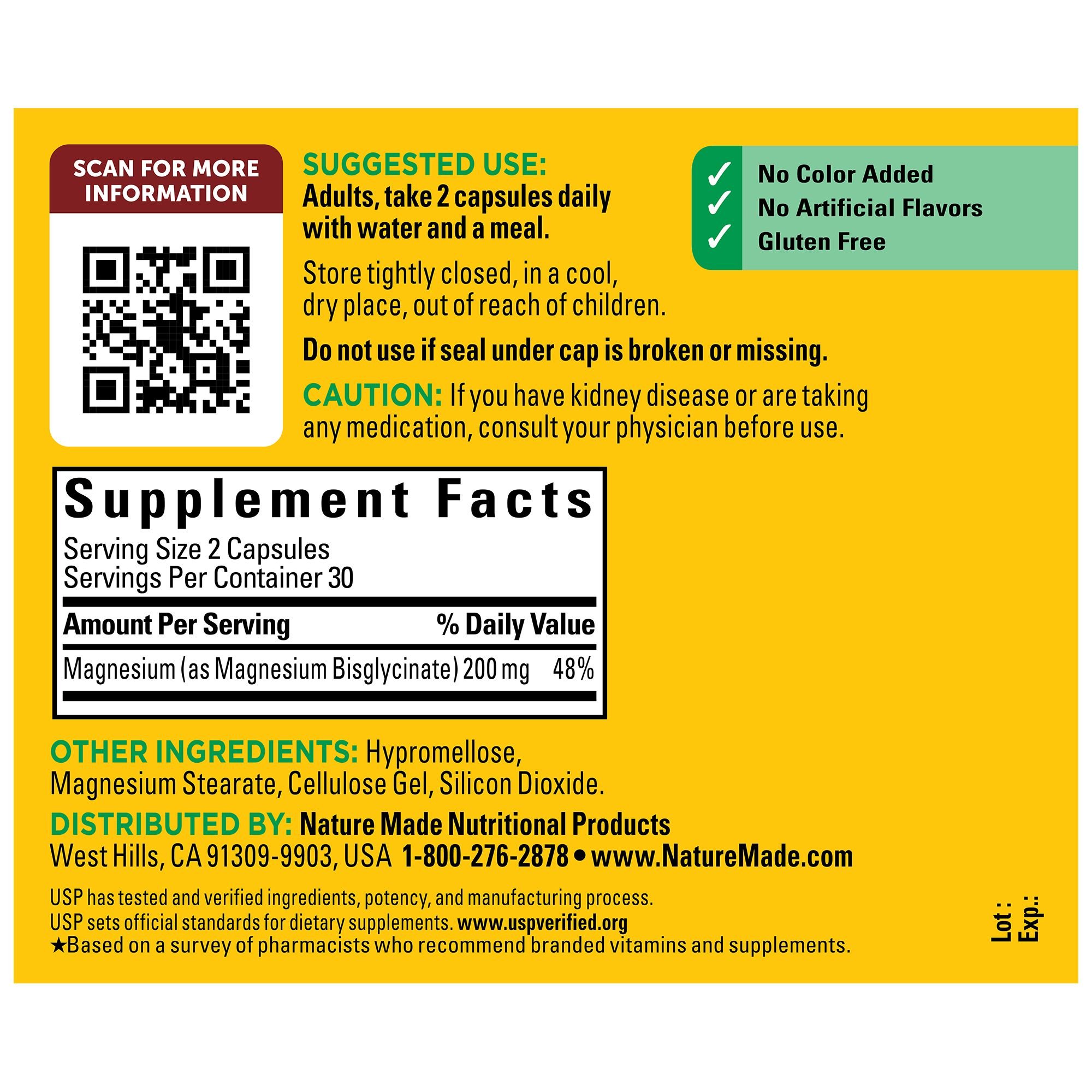
What changes when you use the same basis? DAYLO declares more elemental magnesium per full serving, but Nature Made declares more per capsule. Both bottles provide 30 days at their respective directions. Neither observation establishes better absorption, better sleep or a better personal fit. Per-capsule division is comparison arithmetic, not advice to alter either product's directions.

Why a generic glycinate-to-magnesium calculator can mislead
A percentage for a defined chemical compound is not automatically the percentage in every commercial ingredient sold under a similar name. A chemistry paper lists magnesium bisglycinate at approximately 14.1% magnesium by mass. That is a composition reference, not a way to verify a finished supplement. See Case and colleagues, Table 1.
Commercial preparations can also differ. For example, ingredient manufacturer Balchem sells both original and buffered magnesium bisglycinate; its buffered version includes additional magnesium oxide. That is evidence of a formulation difference, not a reason to assume that either product in our table contains that buffered ingredient. Balchem describes the two versions here.
DAYLO's panel lists 275 mg of elemental magnesium from 2,500 mg of magnesium glycinate per serving. Ingredient specifications differ between suppliers, so do not recalculate any panel with a generic 14–18% conversion. If two figures on a label seem not to match, the manufacturer can provide the ingredient specification and serving basis.
Is 500 mg of magnesium glycinate too much?
It depends on what the 500 mg measures. If the Supplement Facts panel lists 500 mg of elemental magnesium per serving, that is above NIH's 350 mg adult upper limit for magnesium from supplements, so check with a healthcare professional before using it. If 500 mg is the weight of the magnesium glycinate compound, the magnesium it supplies is far lower and should be printed on the back of the bottle. DAYLO's three-capsule serving, for example, lists 2,500 mg of magnesium glycinate and 275 mg of elemental magnesium.
If a bottle shows only a compound weight and no elemental amount, leave the comparison unresolved rather than guessing.
Daily Value, dietary needs and the supplemental limit are different
The 420 mg Daily Value is the US labeling reference for magnesium for adults and children age four and older. A serving's %DV compares its nutrient amount with that reference. It is not an absorption percentage or a personalized prescription. FDA's Daily Value reference lists magnesium on page 4.
Recommended total dietary intake varies with age, sex and life stage. Separately, NIH lists an adult upper limit of 350 mg daily from supplements and medications, unless a healthcare professional recommends otherwise. This limit excludes magnesium naturally present in foods and beverages; it is not a target to reach with capsules. Higher supplemental amounts can cause diarrhea, nausea and abdominal cramping. See NIH's consumer magnesium guide.
Check multivitamins, antacids, laxatives and other magnesium sources before adding another product. Kidney disease increases the risk of magnesium toxicity. Magnesium can also interfere with certain antibiotics and bisphosphonates; a pharmacist can advise on the timing of your specific medicines. NIH details these risks and interactions.
Discuss suitability with a qualified healthcare professional if you are pregnant or nursing, have a medical condition, take medicines or are considering a supplement for a child. Bring the complete labels, not just the front-of-bottle amounts. NIH NCCIH's general supplement guide explains why this context matters.

Make the buying decision after the label comparison
First decide whether the elemental amount and capsule routine fit the plan you have discussed with your healthcare professional. Then compare the complete ingredients and current cost. Use checkout cost ÷ days at the product's directions, keeping shipping, discounts and subscription requirements explicit. In the example above, both bottles last 30 days, so different capsule counts do not create a longer supply.
DAYLO may fit an adult who wants its declared 275 mg serving and a three-capsule daily routine. Keep comparing if you need a different elemental amount, fewer capsules, a different format or evidence beyond a manufacturer's declaration. You can review DAYLO's current ingredients and directions without treating a larger compound number as a benefit. DAYLO also pairs it with ashwagandha in its Wind-Down routine; our ashwagandha root vs extract guide explains how to read that label.
Sources and how this guide was checked
By Kazi Hyeat, Founder, DAYLO. Source check: October 29, 2026. We inspected both manufacturers' digital Supplement Facts images and product directions, then calculated per-capsule amounts and bottle duration. NIH and FDA support the labeling and safety explanations; the chemistry paper and ingredient-maker documentation explain why a generic conversion is not product verification. Public formulations can change: check the package you receive. No finished-product laboratory test is claimed.
General information, not personal medical advice.